
An Honest Disclosure
This site is 100% reader supported. The product links in this tool are affiliate links (e.g., to Amazon). If you buy something through them, I may earn a small commission at no extra cost to you. I chose these products based on my experience and their value. You can read my full affiliate disclosure here.
This is the number one question I get about power stations, and it is the most confusing one. You see numbers like 200W, 500W, 256Wh... what does it all mean?
Let's clear it up. There are only two numbers you need to care about:
- Watts (W): Think of this as the *speed* of power. It is the amount of power a device *needs* at any one moment to run. A 12v cooler might need 45W, while a phone charger needs 10W.
- Watt-Hours (Wh): Think of this as the *size of your fuel tank*. It is the total amount of energy stored in the battery. A 256Wh battery can run that 45W cooler for about 5.5 hours (256 / 45 = 5.6).
To find the right power station, you just need to do some simple maths. Or, you can just use my simple calculator below.
Adam's Power Station Calculator
1. What do you need to power?


How to Charge Your Power Station
Remember, your power station is just a big battery. You need to fill it up.
- At Home: This is the best way. Plug it into a wall socket before you leave. A small unit will charge in 3-4 hours, while a big one can take 8 hours.
- In the Car: You can charge it from your car's 12v "cigarette" socket while you drive. This is very slow, but it is great for topping up the battery on the way to the campsite.
- With Solar: Most power stations can be hooked up to a solar panel. This is fantastic for off grid trips, as you can top up the battery during the day while you are out hiking.
A Note on Kettles and Heaters
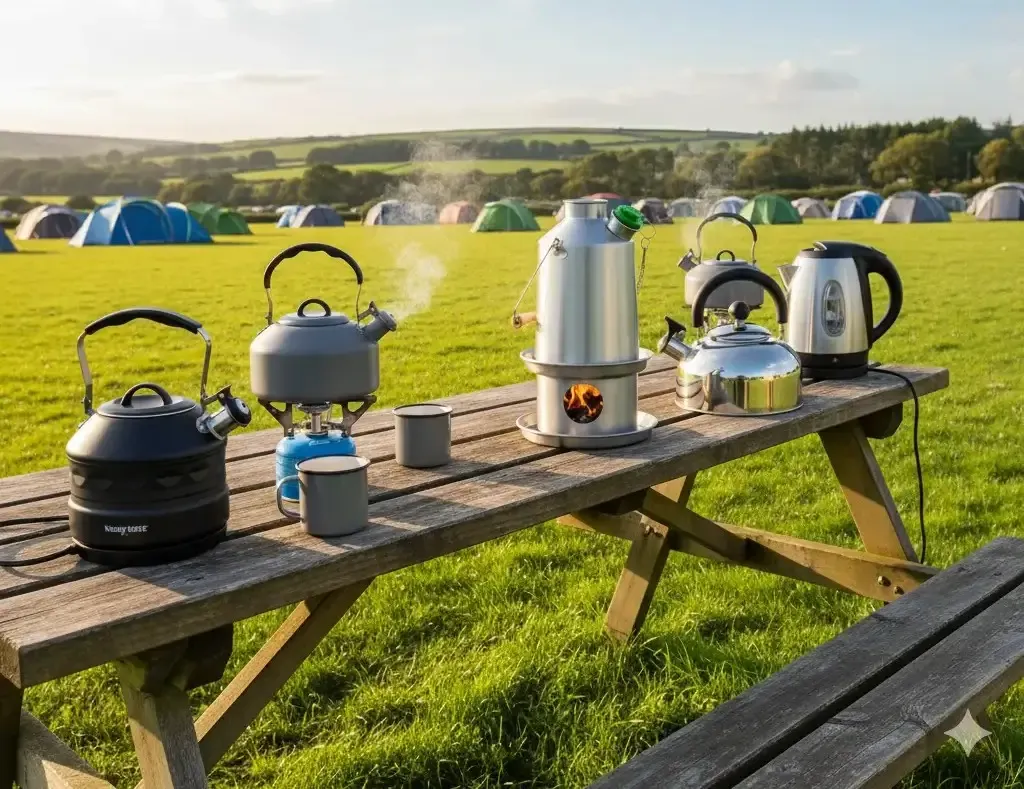
You will notice I did not include kettles, toasters, or heaters in my calculator. That is because these devices use a massive amount of power (1000W to 2000W). They will instantly overload and shut down most portable power stations. For hot drinks, stick to your gas stove.
I hope this tool helps you figure out what size unit you need. For a full comparison of my favourite models, make sure to read my complete guide to the best portable power stations.
Frequently Asked Questions
What's the difference between Watts (W) and Watt-Hours (Wh)?
It's simple. Think of Watts (W) as the *speed* of power. It's the amount of power a device *needs* at any one moment to run. A cooler might need 45W. Think of Watt-Hours (Wh) as the *size of your fuel tank*. It's the total amount of energy stored in the battery. A 256Wh battery can run that 45W cooler for about 5.5 hours.
Can a power station run a camping kettle or heater?
For the most part, no. Kettles and heaters use a massive amount of power (1000W to 2000W). Most portable power stations are designed for low power items and have a maximum output of 300W or 500W. Plugging in a kettle will instantly overload it. Always check the 'W' rating of your appliance before you plug it in. Stick to low wattage travel kettles or, even better, a gas stove.
How long does it take to recharge a power station?
It depends on the size and the charging method. A small 256Wh unit will charge from a wall socket in about 3-4 hours. Charging from your car's 12v socket is much slower, often taking 5-7 hours. Solar charging is the slowest and depends entirely on the sun, but it's great for topping up the battery during the day.