
There's nothing quite like the panic of staring at a booking form and wondering if you actually need a "Serviced Pitch" or if "Hardstanding" means you'll be sleeping on concrete. When I first started camping, the jargon was baffling. I didn't know a footprint from a flysheet, and I definitely didn't know what an Elsan point was (until I unfortunately had to find one).
I've compiled this massive A-Z glossary to clear up the confusion. It covers everything from technical gear ratings to the slang used by site wardens across the UK. Bookmark this page—it might just save you from booking the wrong pitch!
A
Airbeam / Inflatable Tent
A tent that uses air-filled tubes instead of fibreglass or metal poles. They are much faster to pitch but require a pump.
Amp (Amperage)
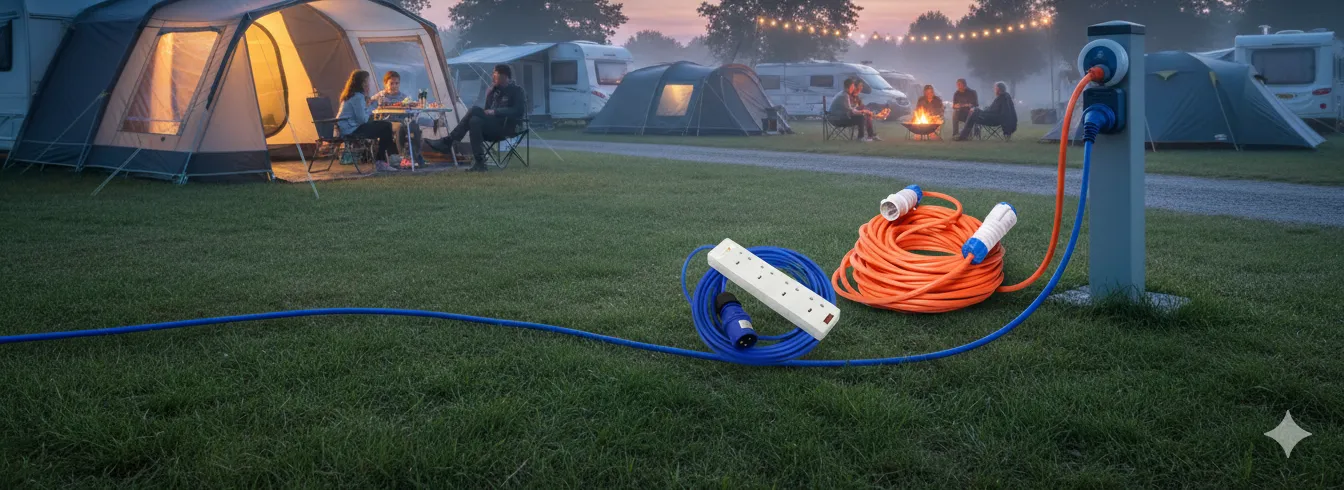
The flow rate of electricity. Most UK campsites offer a 10 Amp or 16 Amp supply. Exceeding this by using too many appliances trips the power. See my EHU Guide.
Awning
An extension that attaches to the side or front of a tent/campervan to provide extra living space or shelter from rain.
B
Baffle
A piece of fabric inside a sleeping bag that prevents the filling from moving around, preventing cold spots. Also refers to the 'Zip Baffle' which stops draughts coming through the zip.
Berth
The number of people a tent sleeps. Tip: Manufacturers measure this by body width only. A 4-berth tent is usually only comfortable for 2 adults with luggage.
Bivvy Bag
A waterproof bag that goes over your sleeping bag, allowing you to sleep outdoors without a tent.
Blackout Bedroom
Tent bedrooms made from dark fabric to block early morning sunlight. Essential if you want to sleep past 5am in June.
Butane
A type of gas used for camping stoves (usually in blue bottles). It works well in summer but struggles to burn in freezing temperatures.
C
Cadac
A very popular brand of gas BBQ system used by campers. You'll see them everywhere on UK sites.
Calor
The main brand of refillable gas bottles in the UK. Available in Butane (Blue) and Propane (Red).
CDP (Chemical Disposal Point)
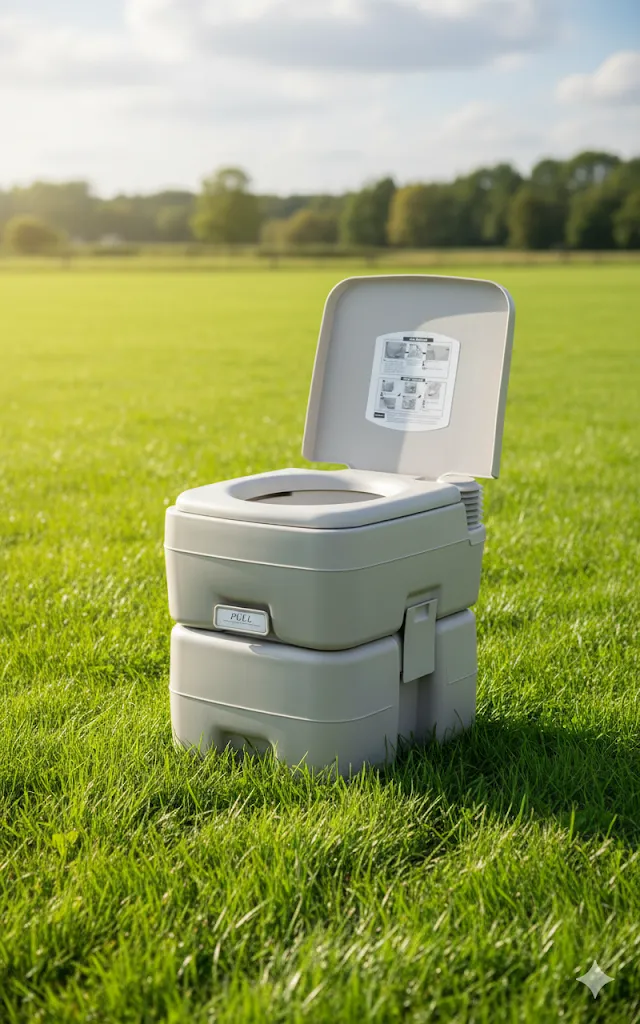
Also known as the Elsan Point. The dedicated place to empty your camping toilet waste cassette. Never use a normal sink!
Chemical Toilet
A portable toilet that uses chemicals (Blue/Green fluid) to break down waste. See my guide to camping toilets.
Cool Box (Passive vs Electric)
A passive box uses ice packs. An electric box plugs into your car (12V) or mains (230V) to actively cool the contents.
D
Denier (D)
The thickness of the fabric thread. Higher numbers (e.g., 150D) mean thicker, tougher fabric, but also a heavier tent pack weight.
Dome Tent
A tent shape where poles cross in the middle. Very stable in wind but often has less usable headroom than a tunnel tent.
Double Skin
A tent with two layers: an inner bedroom and an outer waterproof flysheet. This design prevents condensation from dripping on you.
E
EHU (Electric Hook Up)
A pitch with access to electricity. Requires a specialist hook-up lead with CEE 17 (blue) connectors.
Elsan
A brand name often used as a generic term for chemical toilet fluid or the disposal point itself.
Envelope Bag
A rectangular sleeping bag. Great for space and movement, but less warm than a mummy bag as heat escapes from the wide top.
F
Family Tent
Large tents, usually tunnel-shaped, designed with standing height living areas and separate bedrooms. See my top family tent picks.
Flysheet
The outer, waterproof layer of a tent.
Footprint
A protective tarp placed under the tent. It stops the sewn-in groundsheet getting muddy or pierced by stones. Highly recommended.
Full Service Pitch
A premium pitch that includes EHU, a fresh water tap, and a grey water drain right on the pitch.
G
Gaz
Often refers to "Campingaz", the blue bottles/canisters common in Europe.
Geodesic
A tent design with multiple crossing poles forming triangles. Extremely strong and used for mountain/expedition camping.
Glamping
"Glamorous Camping." Staying in pre-erected yurts, pods, or bell tents with real beds and electricity.
Grey Water
Waste water from washing up or showering. It must be disposed of in designated drains, not on the pitch.
Groundsheet
The waterproof floor of the tent. A "Sewn-In Groundsheet" (SIG) is stitched to the walls to keep bugs and draughts out.
Guy Lines
The cords that anchor the tent to the ground for stability. Always use them, even in calm weather!
H
Hardstanding
A pitch made of gravel, concrete, or asphalt. Designed for caravans but some allow tents. You need Rock Pegs to pitch here.
Hook-Up Lead
The orange cable used to connect your tent to the campsite's EHU bollard.
Hydrostatic Head (HH)
The waterproof rating of fabric in mm. 1500mm is the legal minimum. 3000mm is good standard. 5000mm+ is excellent for harsh UK weather.
I
Inner Tent
The breathable bedroom compartment inside the main flysheet.
L
Leisure Battery
A heavy-duty battery designed to provide power over a long period (unlike a car battery). Used in caravans or with power stations.
Lumen
A measure of light brightness. 100 lumens is good for a tent lantern. 300+ is needed for a main spotlight.
M
Mallet
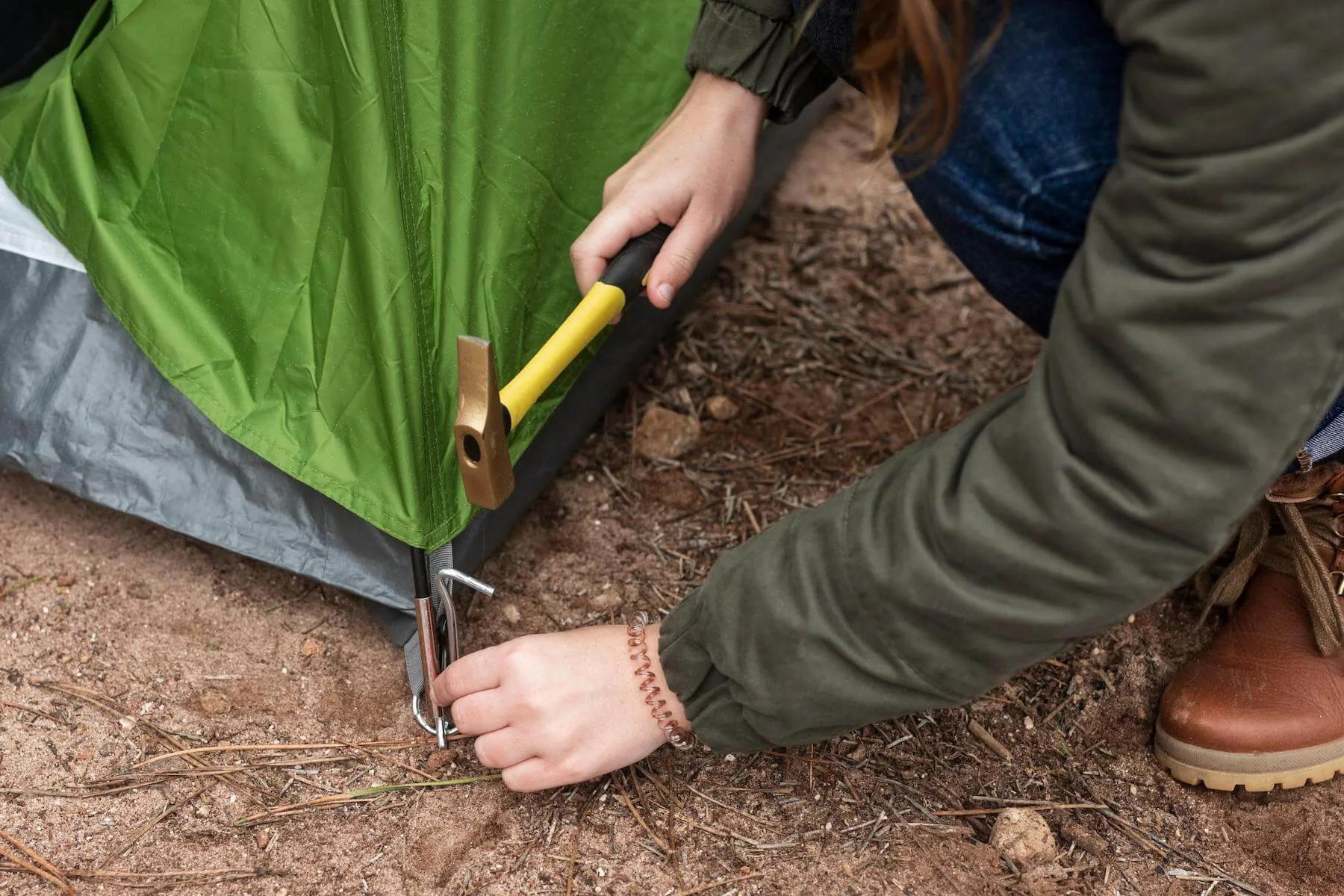
A rubber or wooden hammer for driving pegs. Don't use a metal household hammer as it damages plastic pegs.
Mummy Bag
A tapered sleeping bag with a hood. It hugs the body to retain heat better than rectangular bags. Best for cooler weather.
P
Pack Size
The dimensions of the tent/gear when packed away in its bag. Crucial for checking if it fits in your car boot!
Pegs (Skewer / Rock / V-Peg)
Different pegs for different ground. Wire skewers (for grass), Rock pegs (heavy metal nails for hard ground), V-Pegs (for holding guys in soft soil). See my guide to pegs.
Pitch
The designated spot on the campsite where you set up your tent.
Poly-cotton
A premium tent fabric blend of polyester and cotton. Heavier and more expensive, but quieter in wind, cooler in summer, and warmer in winter.
Propane
Gas that comes in red bottles. It has a lower freezing point than Butane, making it essential for winter camping.
Pup Tent
A small 1-2 person tent pitched alongside a main unit, often for storage or older kids.
R
R-Value
A measure of thermal resistance for camping mats. R-1 is for summer. R-4+ is for winter. Essential to check before buying a mat.
Rock Pegs
Thick metal spikes with plastic tops, looking like large nails. Essential for hardstanding or stony ground.
S
Season Rating
- 1-Season: Summer festival use only.
- 2-Season: Late spring/early summer.
- 3-Season: Spring to Autumn (most standard gear).
- 4-Season: Winter and extreme conditions.
SIG (Sewn-In Groundsheet)
See Groundsheet.
SIM (Self Inflating Mat)
A mattress with an internal foam core that expands when the valve is opened. Warmer and more stable than airbeds. See my review of budget SIMs.
Solar Power Bank
A battery pack with solar panels. Useful for trickle charging, but don't rely on them as a primary power source in the UK!
T
Taped Seams
Heat-sealed tape applied over stitching holes to stop water leaking through. Essential for waterproof tents.
Tog Rating
A measure of thermal insulation, usually for duvets. Not typically used for technical sleeping bags (which use Comfort/Limit ratings), but useful for family camping bedding.
Tunnel Tent
A tent made of parallel arches. They offer the best space-to-weight ratio and usually have good headroom.
W
Warden
The campsite manager/staff. They ensure rules are followed and can help with local info.
Waterhead
Another term for Hydrostatic Head (waterproof rating).
Wild Camping
Camping outside of a designated campsite. Generally illegal in England/Wales without landowner permission, but permitted in parts of Scotland (under access codes).
Windbreak
A fabric wall supported by poles to shelter your cooking area or entrance from the wind.
Z
Z-Liner
A specific type of pole structure or shelf liner, but often refers to "Zip-in" liners for sleeping bags.