
An Honest Disclosure
This site is 100% reader supported. Some links in this guide might be affiliate links (e.g., to Amazon). If you buy something through them, I may earn a small commission at no extra cost to you. I never accept free products or payment for positive reviews. You can read my full affiliate disclosure here.
I learned my lesson about dry bags the hard way. It was a weekend in the Brecon Beacons, and a sudden downpour soaked my duffel bag while I was pitching the tent. My spare clothes were drenched. I spent a cold, damp evening wishing I had spent a few quid on a proper waterproof bag. It is a mistake you only make once.
You might think of dry bags as something for kayakers, but I now consider them absolutely essential for any UK camper. They are your guarantee of a dry sleeping bag and a warm change of clothes, no matter what the weather does. They are also brilliant for organising your gear. Here are the types I recommend.
My Top Recommendations in Brief
- 1 Best Overall: Multi-Pack Set. Best value and flexibility for organising all your kit.
- 2 Best for Sleeping Bags: Compression Dry Sack. A must have for keeping bedding dry and saving space.
- 3 Best for Electronics: Small 5L Bag. Tough protection for your phone and keys.
1. Multi-Pack Set
Best Overall Value
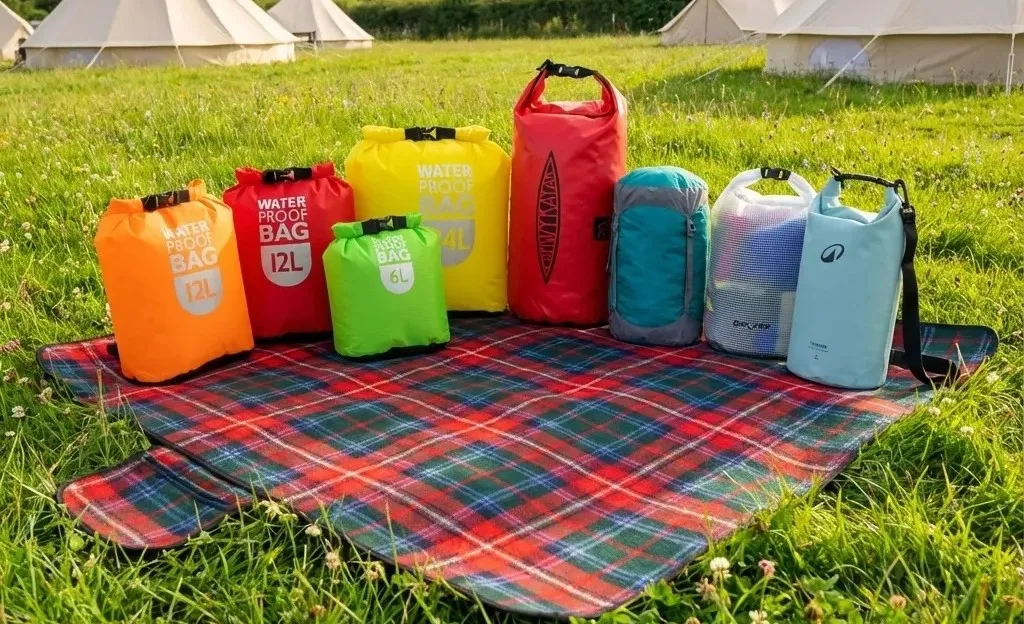
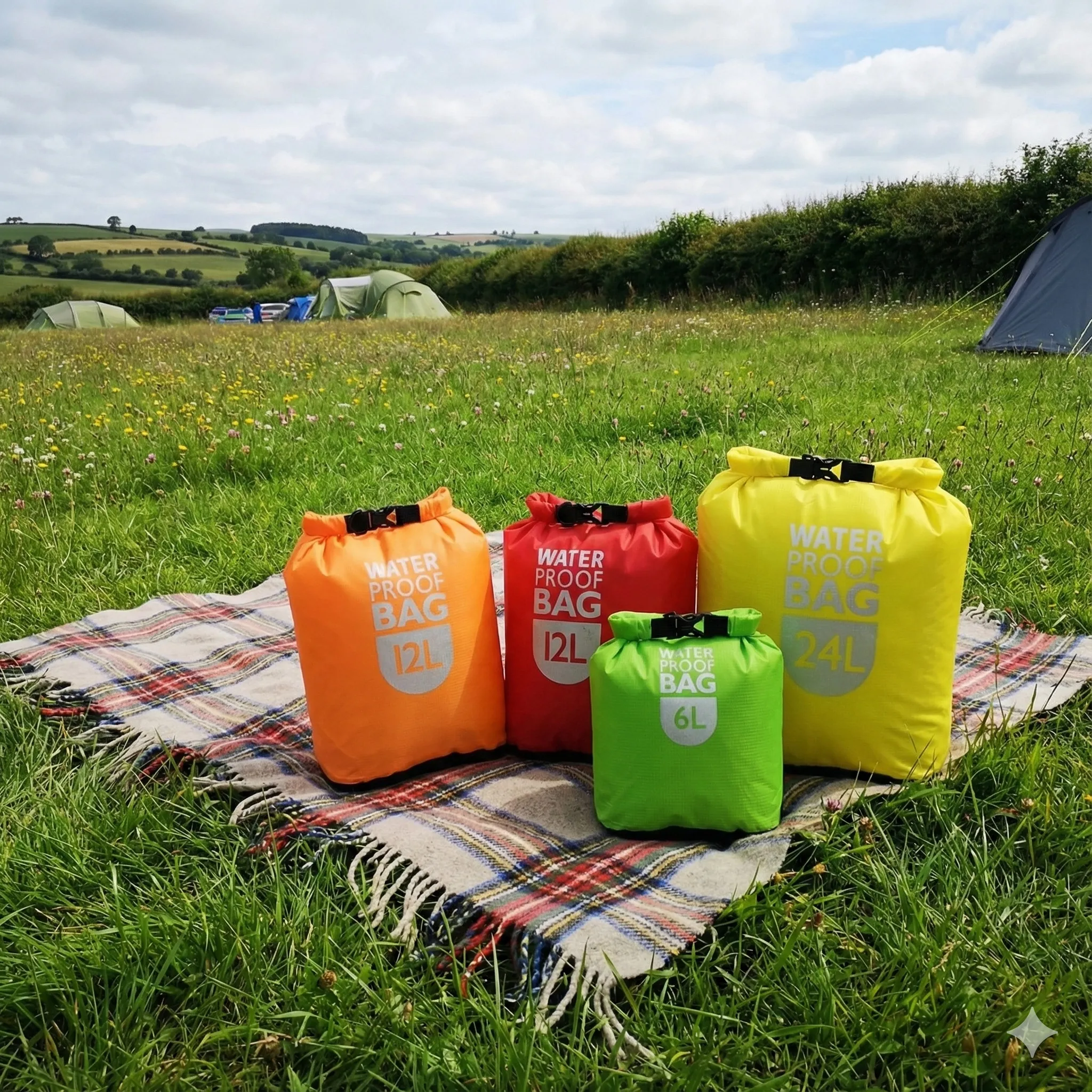
For most people, this is the best way to get started with dry bags. A multi pack gives you a few different sizes to work with, which is perfect for organising your main duffel bag or backpack. I use a large one for my spare clothes, a medium one for my wash kit and food, and a small one for electronics.
It not only keeps everything dry from the outside, but it also contains any leaks from the inside (like shampoo explosions). They are lightweight, great value, and make finding your gear so much easier.
Pros
- Excellent value for money.
- Provides multiple sizes for flexibility.
- Great for organisation.
Cons
- Material is lightweight (not heavy duty).
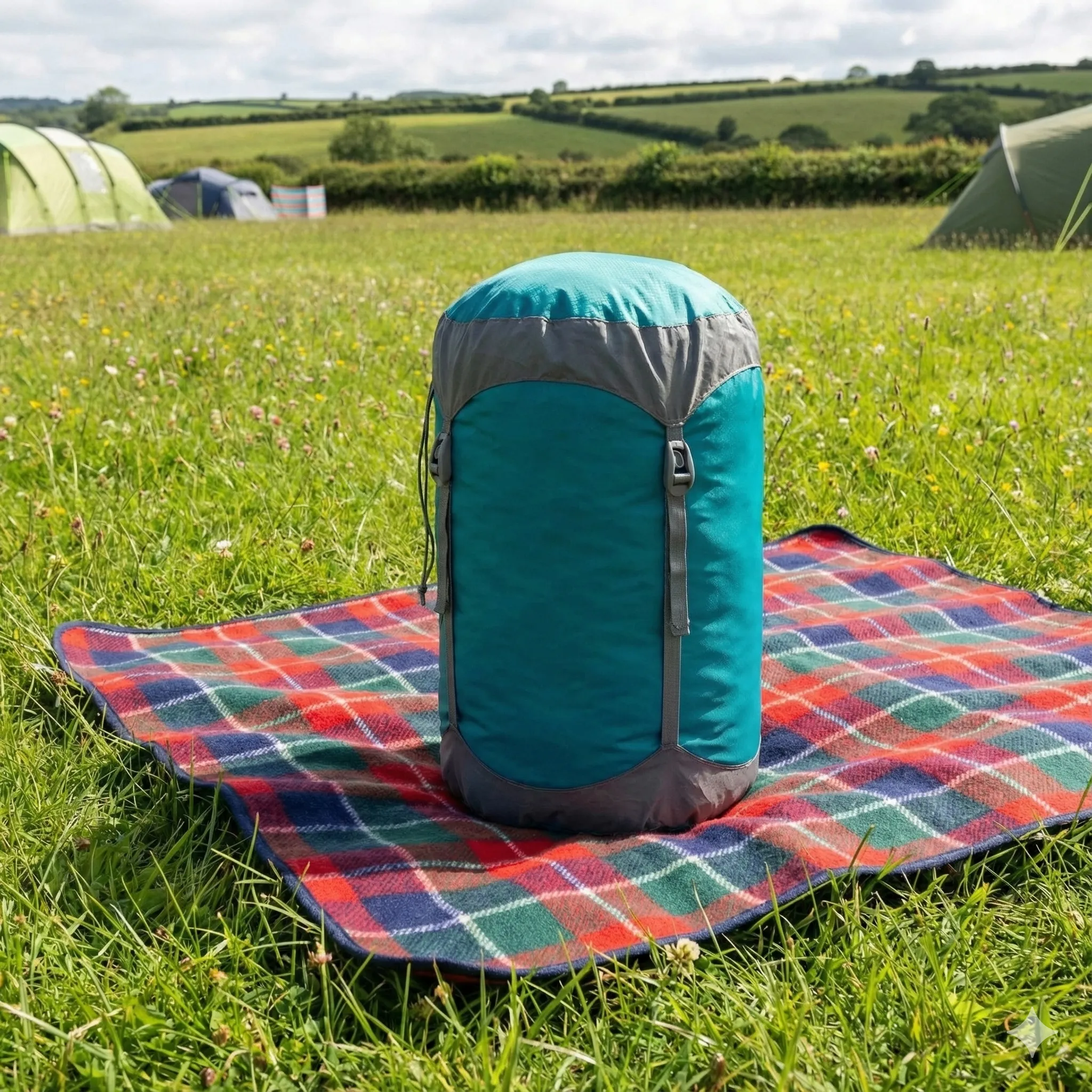
2. Compression Dry Sack
Best for Sleeping Bags
A wet sleeping bag is a camping disaster. A compression dry sack is the answer. It does two jobs brilliantly. First, its waterproof material and roll top closure guarantee your sleeping bag stays bone dry.
Second, the built in straps allow you to squeeze all the air out, shrinking your bulky bag down to a tiny, dense package. This saves a huge amount of space in your car or pack. I consider this a non negotiable piece of kit if you own a down sleeping bag.
Pros
- Keeps sleeping bag 100% dry.
- Dramatically reduces pack size.
- Very durable construction.
Cons
- More expensive than a standard bag.
- Single purpose item.
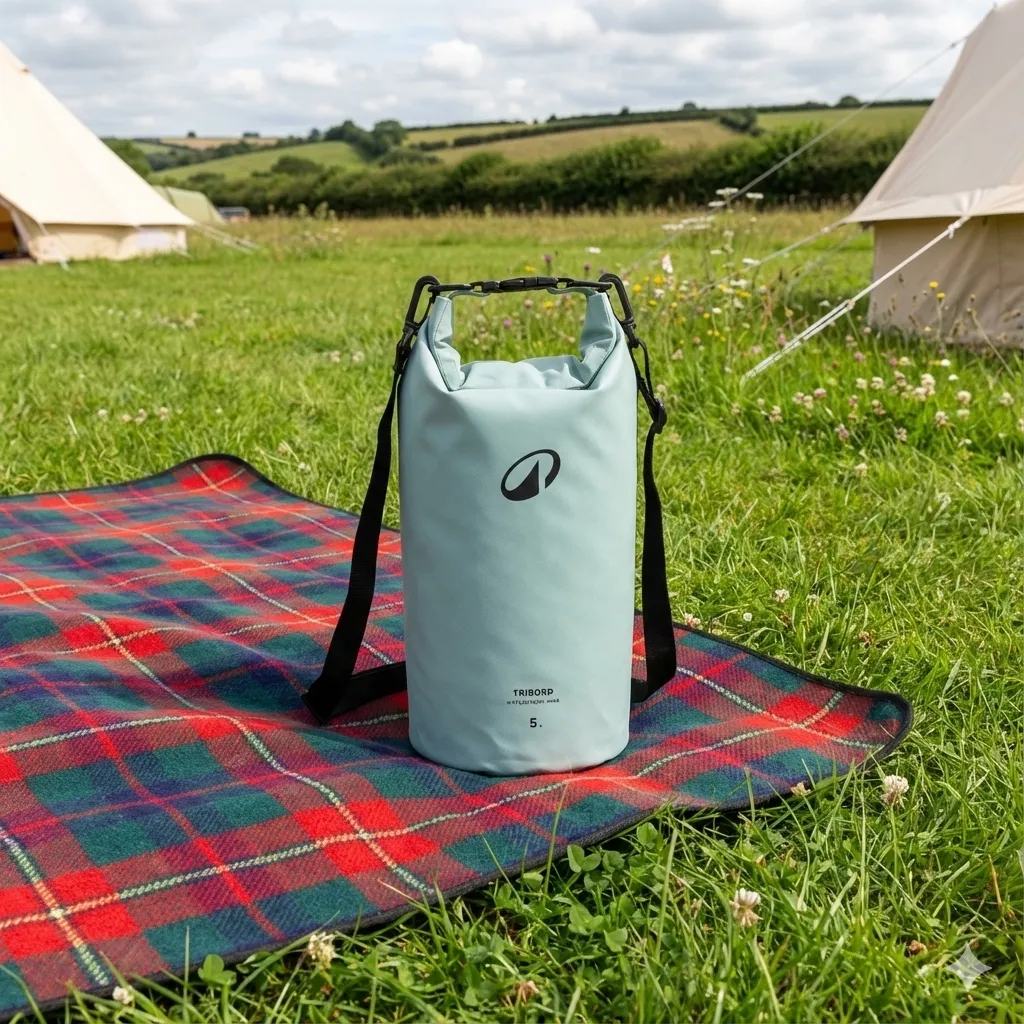
3. Small 5L Bag
Best for Electronics
For your most precious items—phone, car keys, wallet, power bank—you want a dedicated small bag. A 5 litre size is perfect for these essentials. I prefer a slightly thicker material for this one to provide a bit of shock protection as well as waterproofing.
This bag lives at the very top of my rucksack or in the glovebox, ready to be grabbed quickly. It is cheap insurance for expensive gadgets.
Pros
- Perfect size for valuables.
- Easy to stash and access.
Cons
- Too small for clothes.
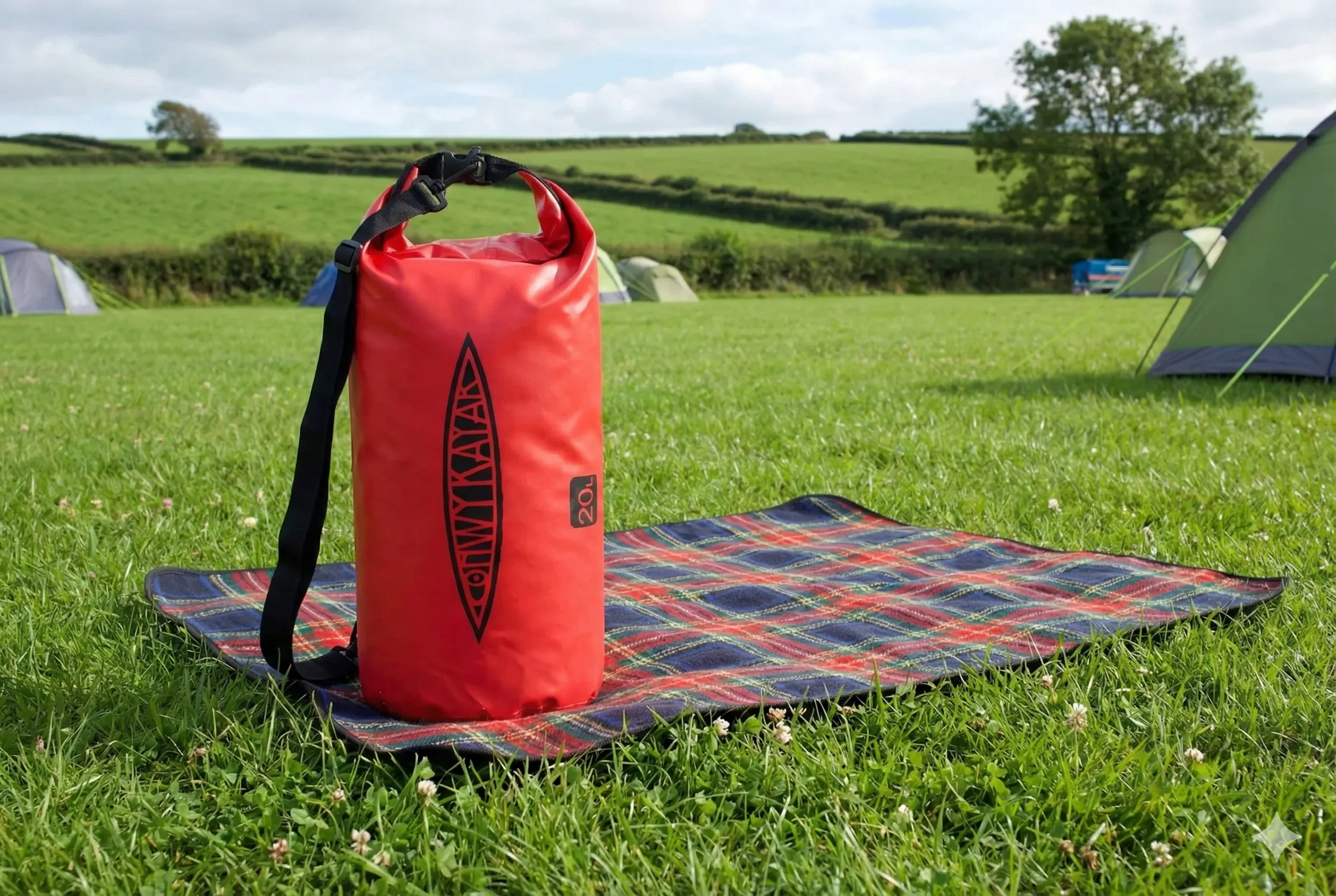
4. The Heavy Duty Hauler
Best Rugged PVC Option
If you are throwing your gear onto a roof rack, into a trailer, or onto a boat, you need PVC. These bags are made from the same tough, rubbery material as inflatable boats. They are totally waterproof and can take serious abuse.
They are heavier and stiffer than nylon bags, so they don't pack down as well inside a rucksack, but for external storage or really wet conditions, they are unbeatable.
Pros
- Extremely durable and tough.
- Can handle abrasion and dragging.
Cons
- Heavy and bulky.
- Stiff material is hard to compress.
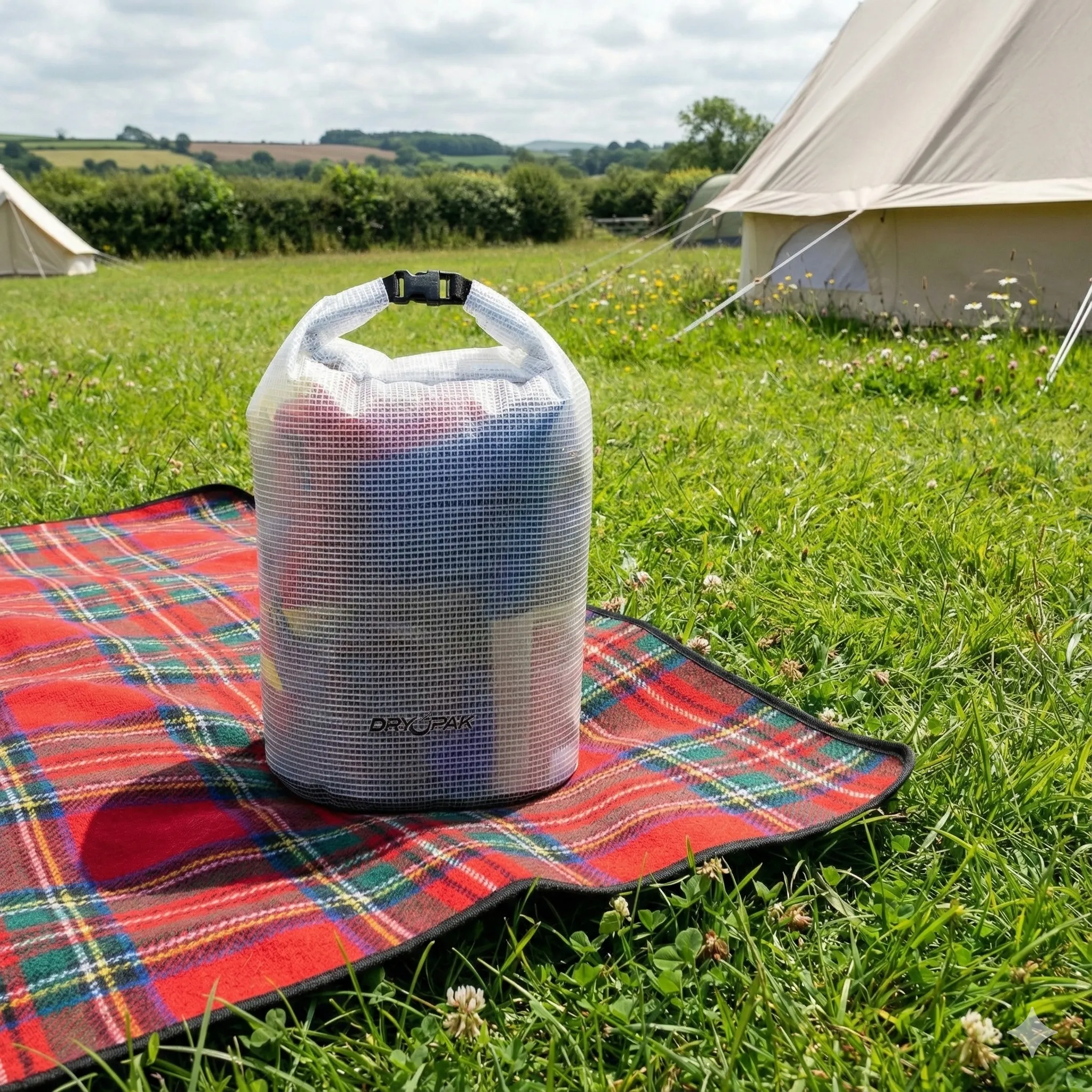
5. The See Through Option
Best for Finding Gear
The biggest frustration with dry bags is forgetting which one holds your socks and which one holds your dirty laundry. A dry bag with a clear window solves this instantly.
It sounds like a small detail, but being able to see contents without unrolling the seal saves time and hassle in a cramped tent. These are usually reinforced with a mesh for strength.
Pros
- Easy to identify contents.
- Usually reinforced material.
Cons
- Window panel can be a weak point over time.
Buyer's Guide: Choosing a Dry Bag
- Material (PVC vs Nylon): Coated nylon (silnylon) is lightweight and flexible, ideal for inside a rucksack. PVC is thick and rubbery, better for roof racks or heavy abuse.
- Closure System: Almost all use a 'roll top'. Fold the top edge over at least three times and clip the buckle. This creates a watertight seal and a handle to carry it.
- Size: 5L for phone/keys. 10L-20L for clothes. 35L+ for sleeping bags. It is best to have a mix.
Frequently Asked Questions
Do I really need dry bags for camping?
In the UK? Absolutely. Even if your rucksack has a rain cover, persistent rain can soak through. A dry bag is the only guarantee that your sleeping bag and spare clothes will be dry when you arrive.
What is the difference between PVC and Nylon dry bags?
Nylon bags are lightweight and flexible, perfect for packing inside your rucksack to organise gear. PVC bags are thick, heavy duty, and rubbery. They are better for external use, like on a kayak or roof rack, where they might get dragged or scraped.